Kyivtransbud - professional installation and arrangement of structures for industrial buildings
The construction of industrial facilities requires high quality and reliability of structures. The construction company Kyivtransbud offers a full range of services for the installation and arrangement of structures for industrial buildings of any complexity.
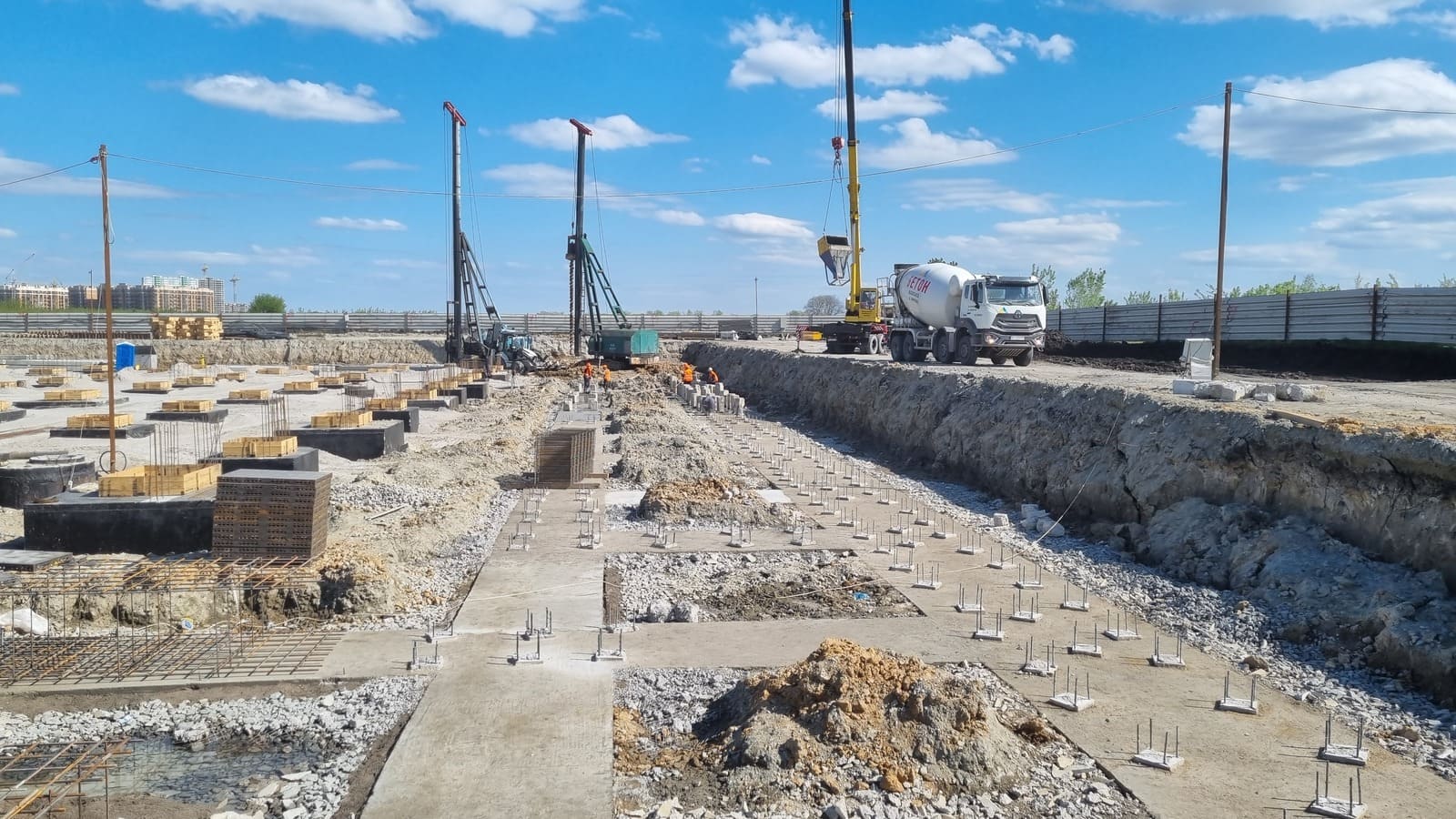
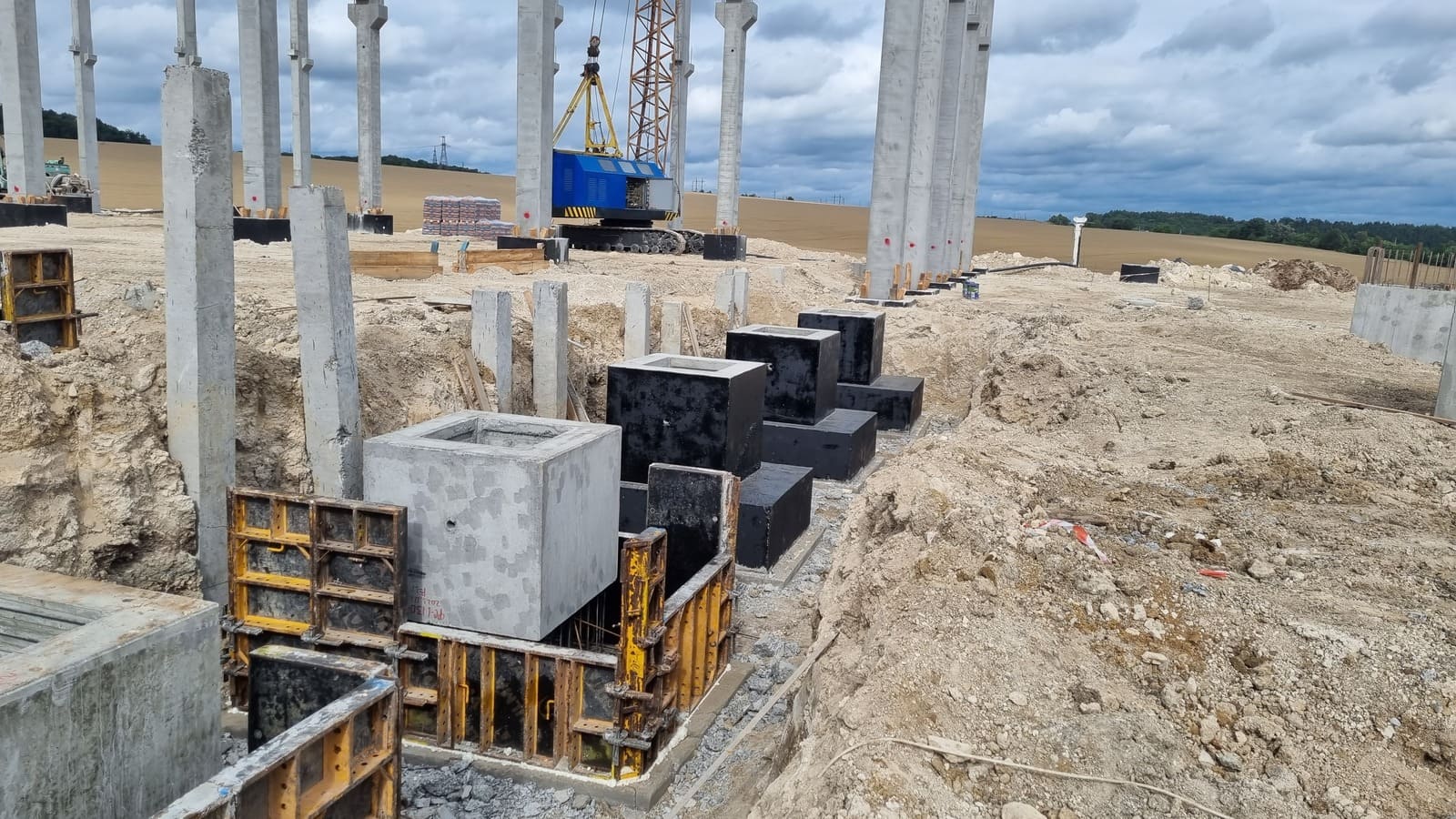
Our experienced specialists will install the foundations taking into account the characteristics of the soil and the loads on the structure. We will take care of reliable waterproofing and foundation insulationto ensure its durability and resistance to moisture and temperature fluctuations.
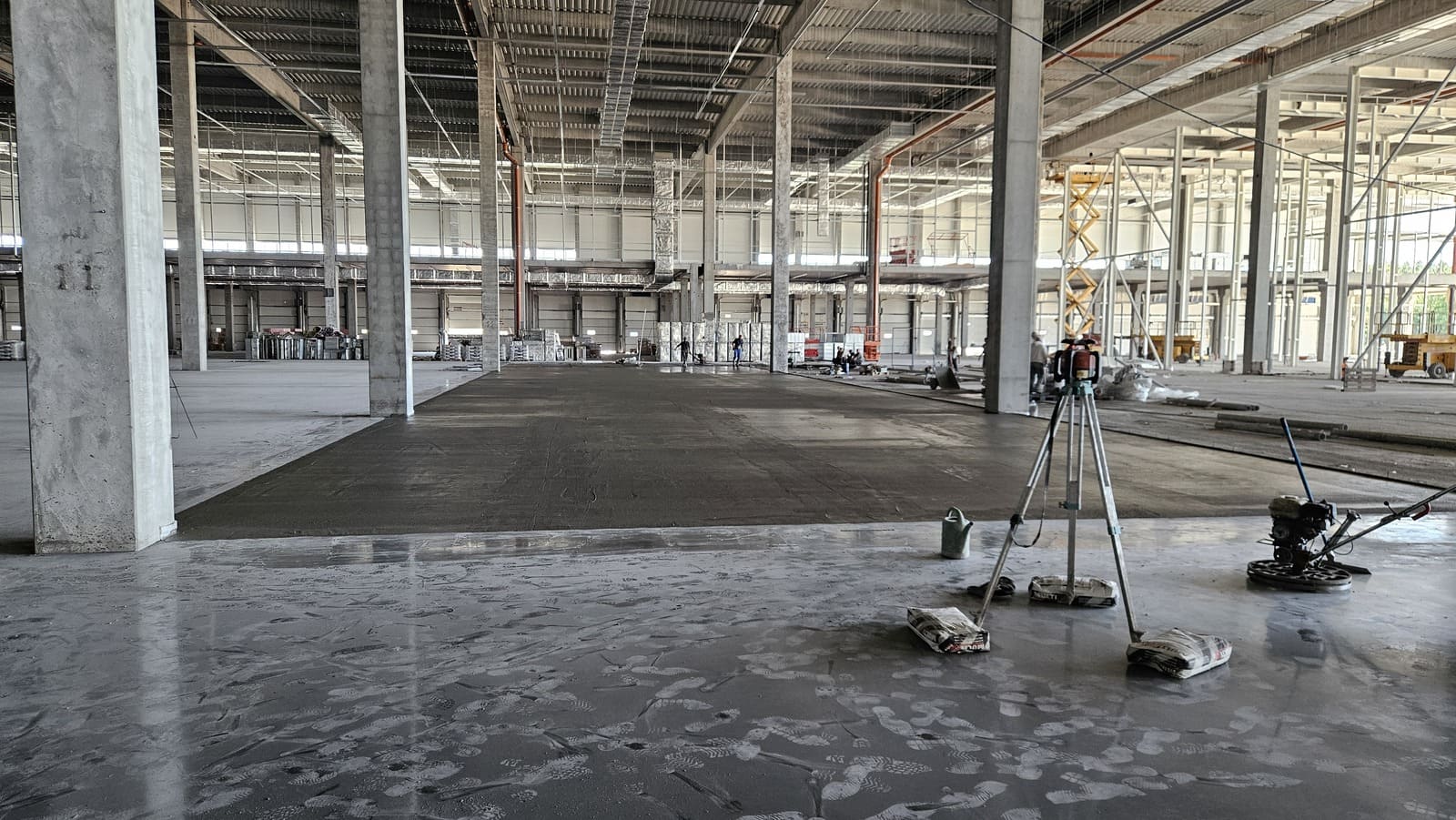
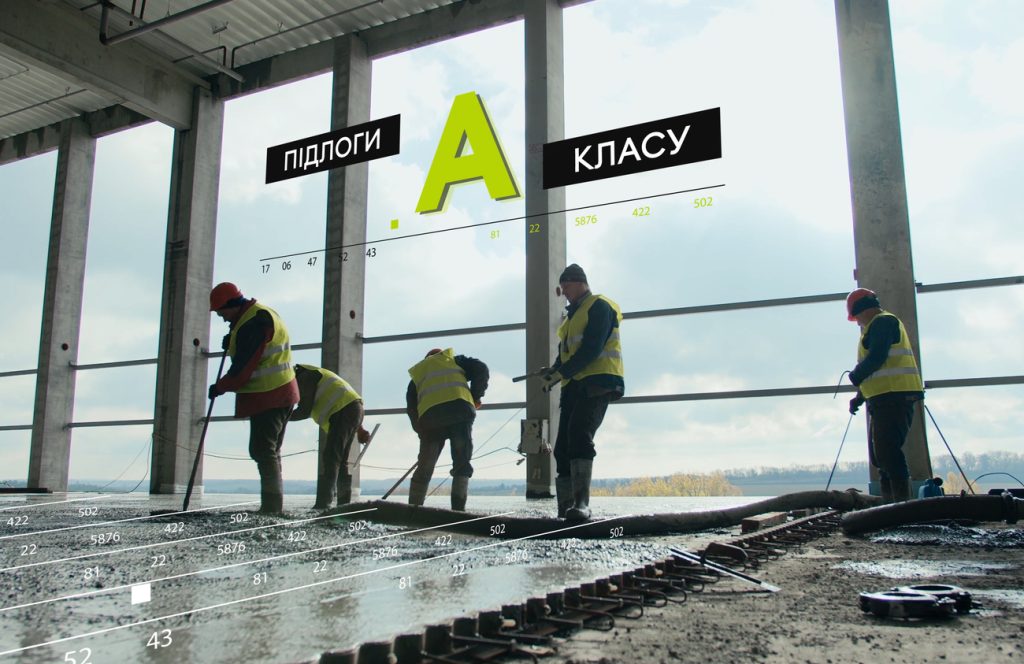
To ensure durability and performance industrial floors We use high-quality concrete and modern installation technologies. Our industrial floors can withstand significant dynamic loads and are highly resistant to abrasion.
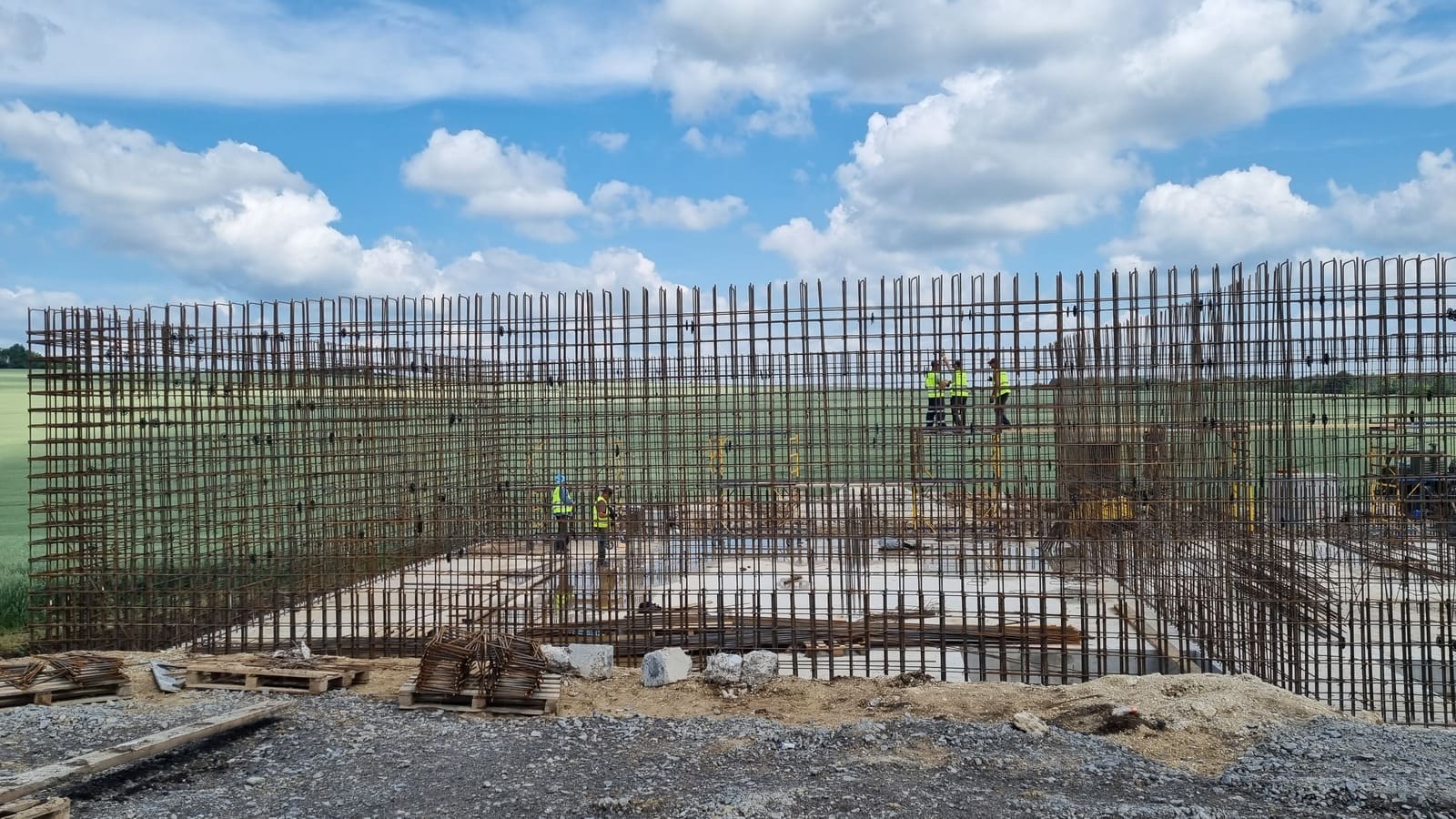
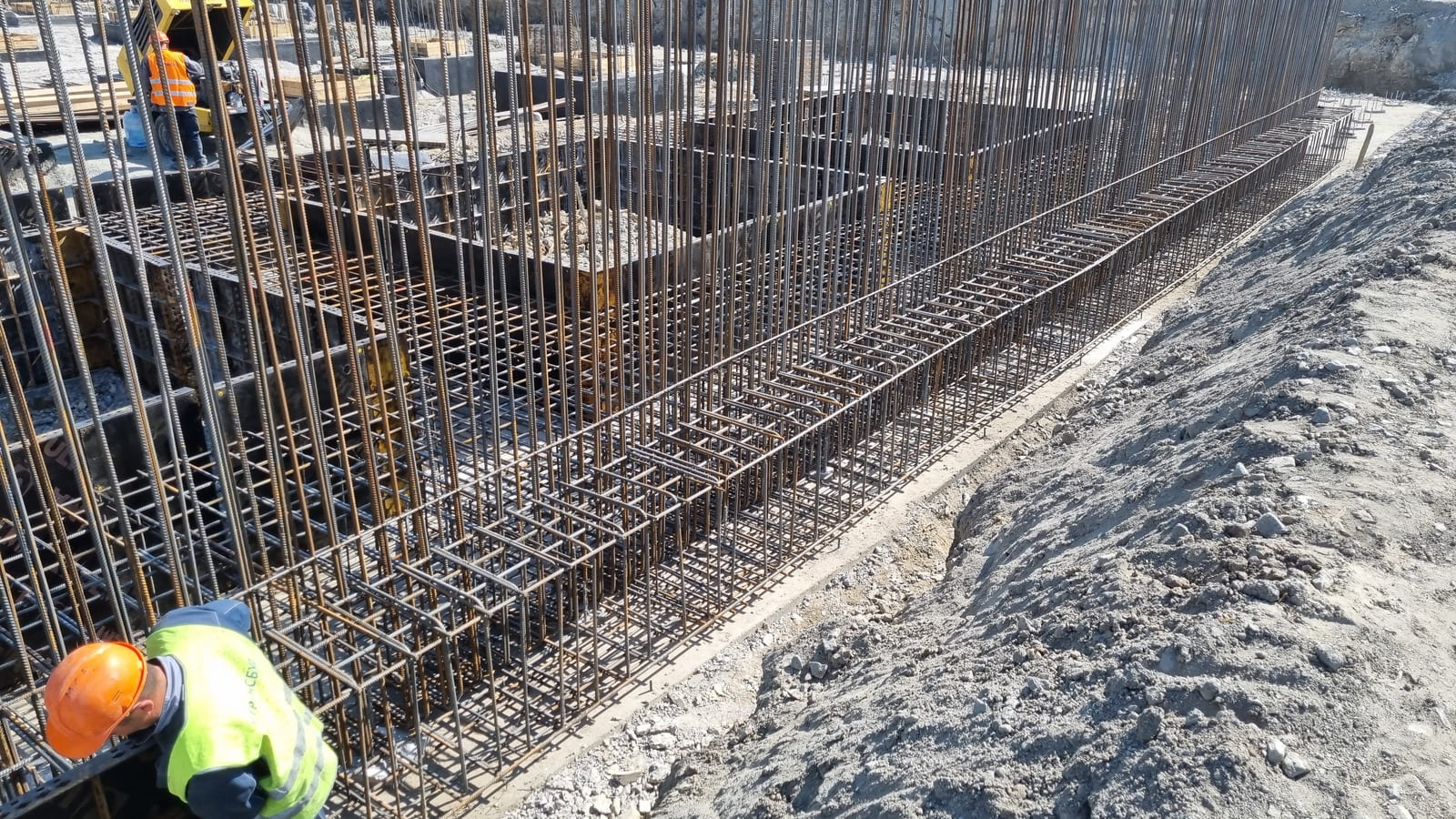
Specialists Kyivtransbud fulfill installation of monolithic reinforced concrete structures of any complexity. We strictly adhere to project documentation and safety standards, use high-quality materials and advanced installation technologies.
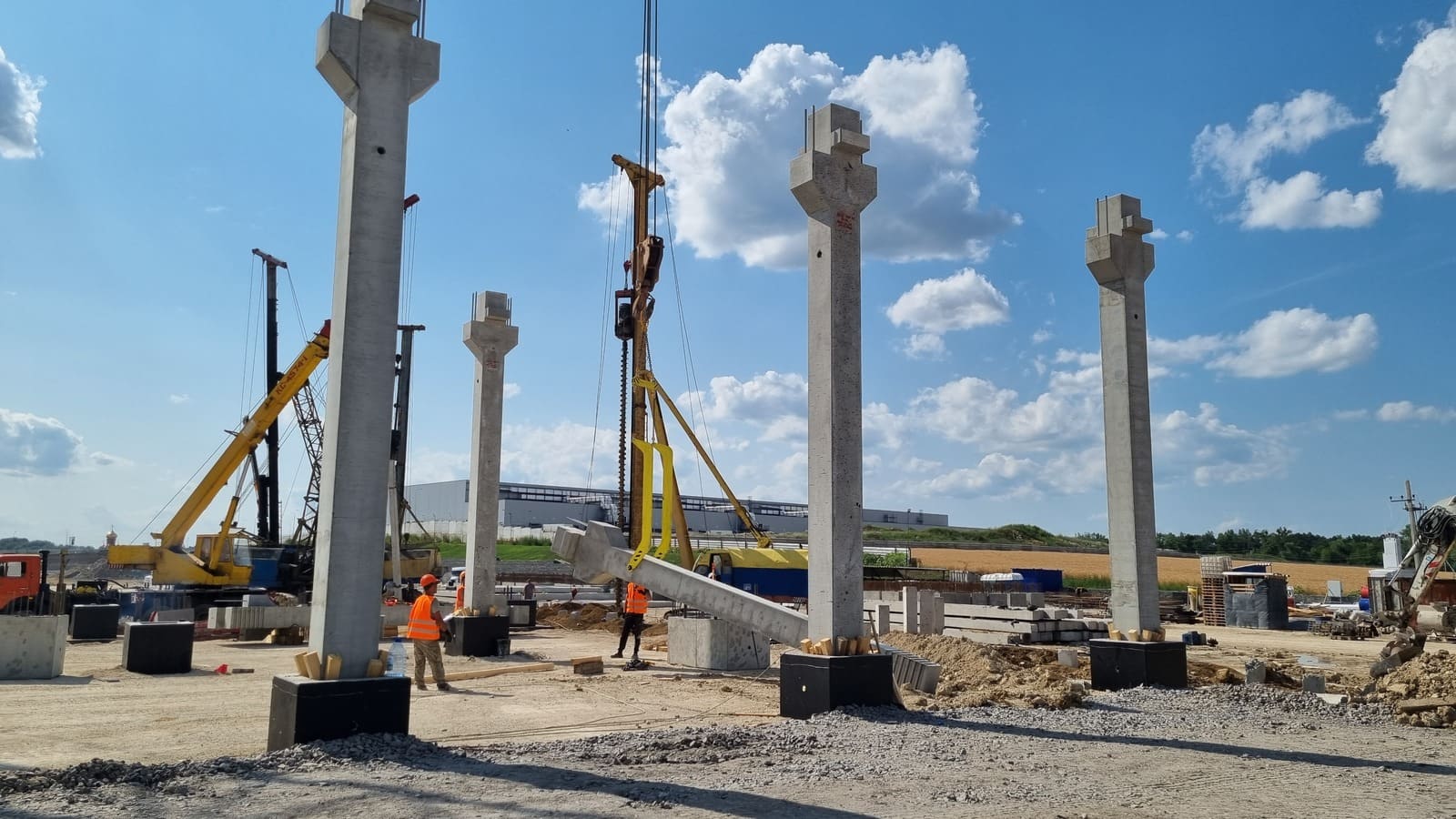
Our experienced welders and assemblers will manufacture and assemble metal structures for your industrial facility. We guarantee high quality welding work and precision installation of metal structures.
For the construction of walls of industrial buildings, we perform masonry made of stone, brick and blocks. Our bricklayers follow masonry technology and use high-quality mortars to ensure the strength and durability of the walls.
Also, specialists Kyivtransbud manufacture and assemble small metal structures, such as stairs, handrails, fences etc. We pay attention to every detail to ensure the reliability and safety of the structures.
If necessary, we will perform arrangement of gabion structures to strengthen slopes, protect against erosion and landscape development on the territory of an industrial facility.
To ensure the safety and privacy of your territory, we will install and arrange a reliable fence made of various materials - corrugated board, mesh, concrete slabs, etc.
Construction company Kyivtransbud highlights the key points to consider when Foundation construction:
1) Planning and selection of the foundation type. Before starting work, it is necessary to conduct geological surveys of the soil on the site to determine its characteristics. Based on this data, as well as taking into account the type of building, load and other factors, the optimal type of foundation is selected - strip, slab, pile, etc.
2) Earthworks. The next step is to mark and dig pits or trenches according to the design. The depth and width depend on the type of foundation. It is important to ensure a flat bottom and vertical or reinforced pit walls.
3) Preparation of the base. At the bottom of the pit, preparatory layers are poured and compacted - sand, gravel, concrete preparation. This ensures an even distribution of loads. A layer of waterproofing is also laid to protect against moisture.
4) Formwork and reinforcement. Formwork is installed to form the contour of the foundation. A reinforcing cage is placed inside to absorb tensile loads. The protective layer of concrete should be sufficient to protect the metal elements of the frame from moisture and seasonal temperature changes.
5) Concreting. The foundation is poured with concrete of the appropriate grade. It is very important to adhere to the technology, ensure the continuity of the process and proper care of the concrete during curing.
6) Waterproofing and backfilling. After the foundation has gained strength, it is waterproofed vertically from the outside. Then, the space between the foundation and the pit walls is filled with soil with layer-by-layer tamping.
7) Insulation of the basement. To protect the foundation from freezing and increase the energy efficiency of the house, the basement is insulated.
Installation of the foundation - is a responsible process that requires knowledge, experience and compliance with building codes. Mistakes or violations of technology can lead to serious problems in the future. Therefore, it is best to entrust this work to qualified specialists who will make a reliable foundation for your buildings.

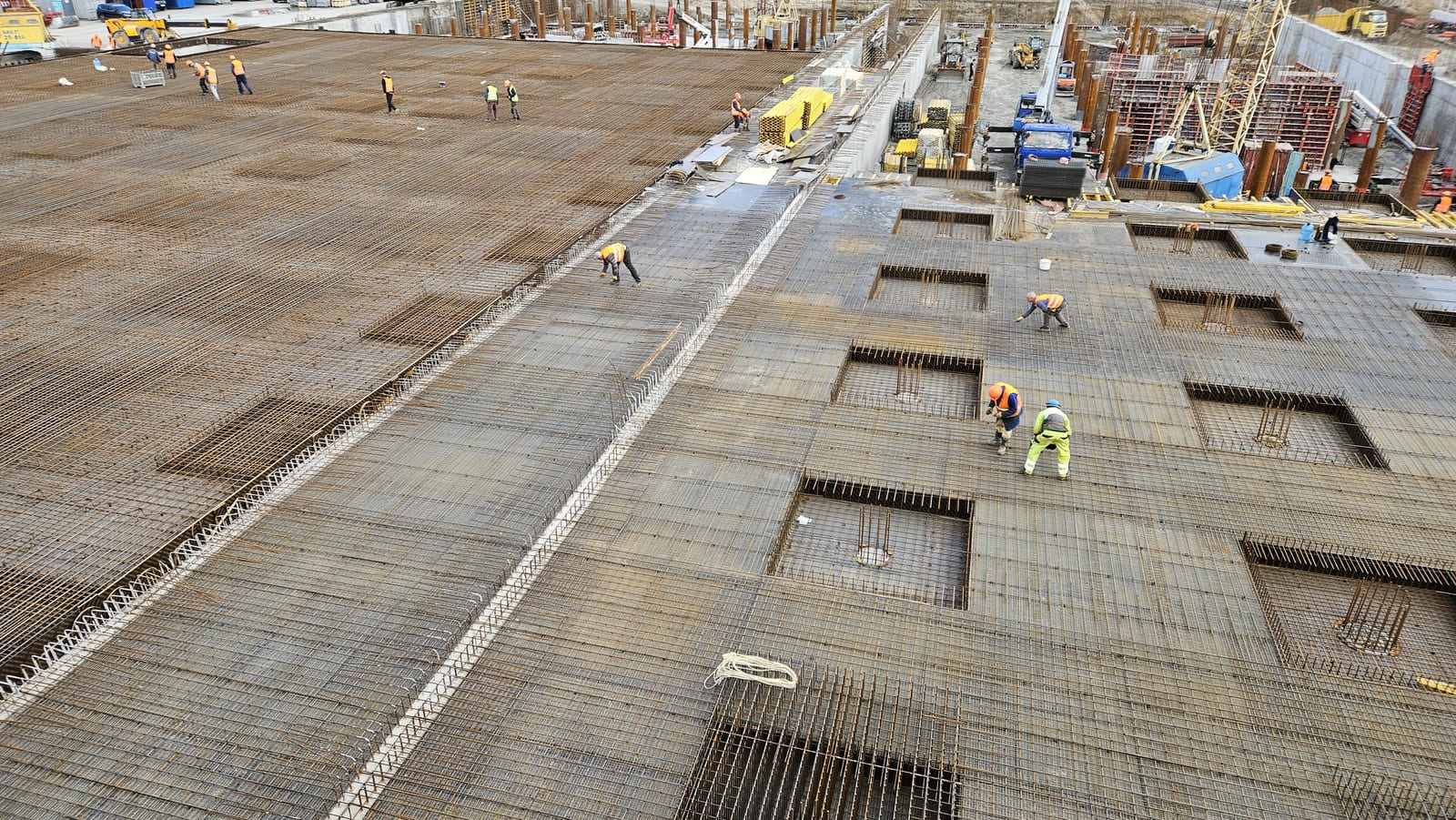
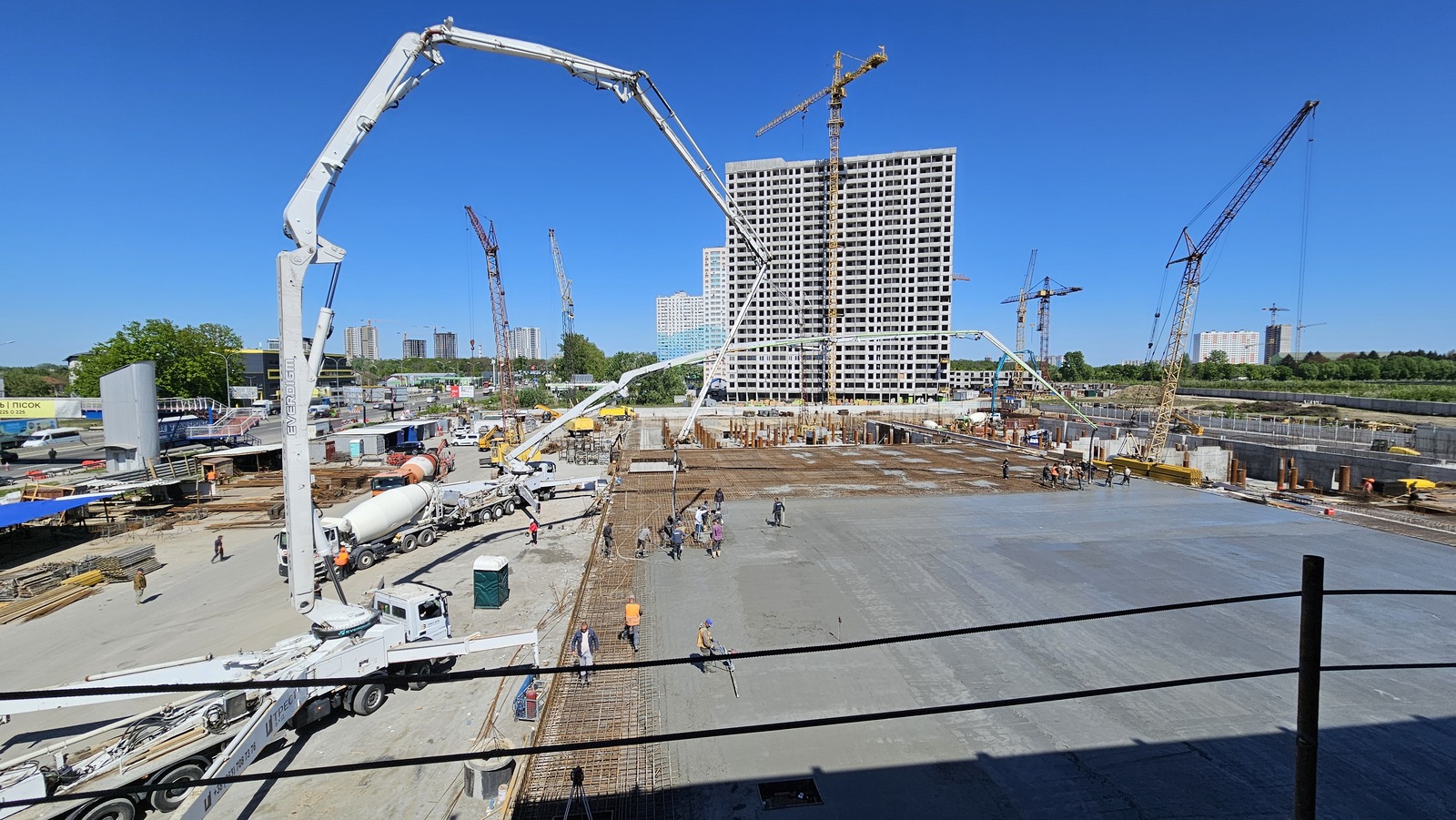
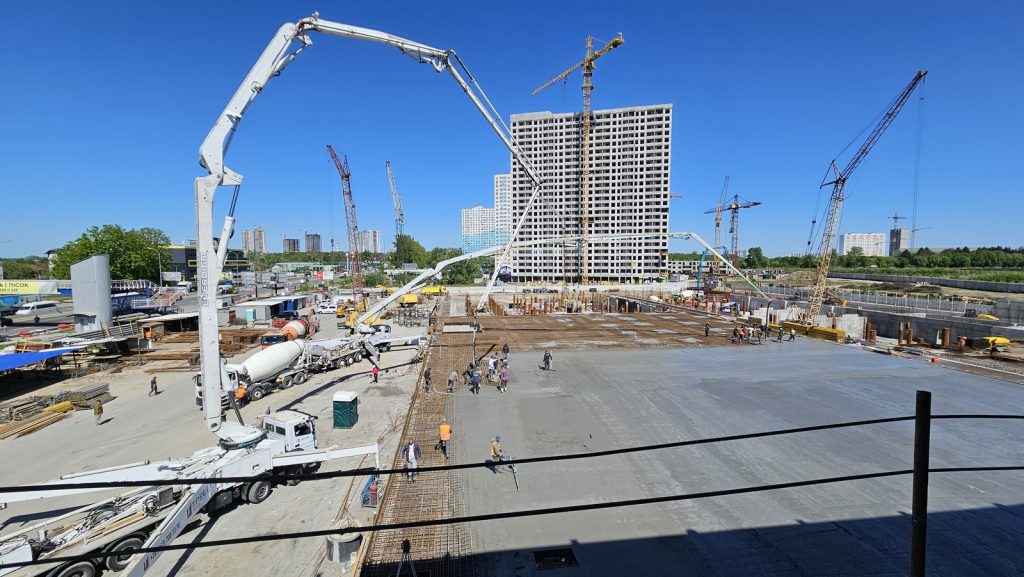
Installation of a floor slab on the first floor of the Green Gallery shopping center
Installation of industrial concrete floors - is a complex process that requires compliance with certain technological steps to ensure high quality, strength and durability of the coating.
Let's look at the main steps in installing industrial concrete floors:
1) Preparation of the base:
- Removing the old coating, cleaning the surface from dust and dirt.
- Leveling and compaction of the soil base, if necessary, laying additional layers of crushed stone, gravel, sand.
- Determining the floor level to ensure uniform thickness and proper drainage.
2) Waterproofing and drainage:
- Laying a waterproofing layer (e.g. plastic film) to protect against moisture.
- In some cases, a drainage system is installed for efficient water drainage.
3) Reinforcement:
- Embedding reinforcing mesh or fiberglass in concrete to increase strength and crack resistance, especially under heavy loads.
4) Laying of concrete mix:
- Use of special concrete compositions with high strength and wear resistance.
- Pouring concrete mass in strips, thorough compaction and leveling.
- Filling in the hardener to ensure a smooth surface.
5) Arrangement of expansion joints:
- Cutting special joints in hardened concrete to prevent uncontrolled cracking.
- Filling the joints with elastic sealants.
6) Surface finishing:
- Mechanical grinding of the concrete floor with a special disk until it acquires a glassy shine.
- Application of various methods to increase smoothness, wear resistance and decorativeness: grinding, polishing, milling, applying polymer coatings, toppings, painting, etc.
- Coating the floor with an impregnating varnish to increase durability, protect it from dust and give it an aesthetic appearance.
7) Concrete maintenance:
- Carry out the necessary care to ensure that the concrete reaches its design strength: moisturizing, covering with a film, and treating with special agents.
8) Additional measures:
- Floor markings and coloring to mark work areas, evacuation routes, improve safety and organize space.
Following these steps and engaging qualified specialists allows you to create a high-quality, durable and long-lasting industrial concrete floor that can withstand significant operational loads for many years. Regular maintenance and inspection of the floor is also important to ensure its reliability.

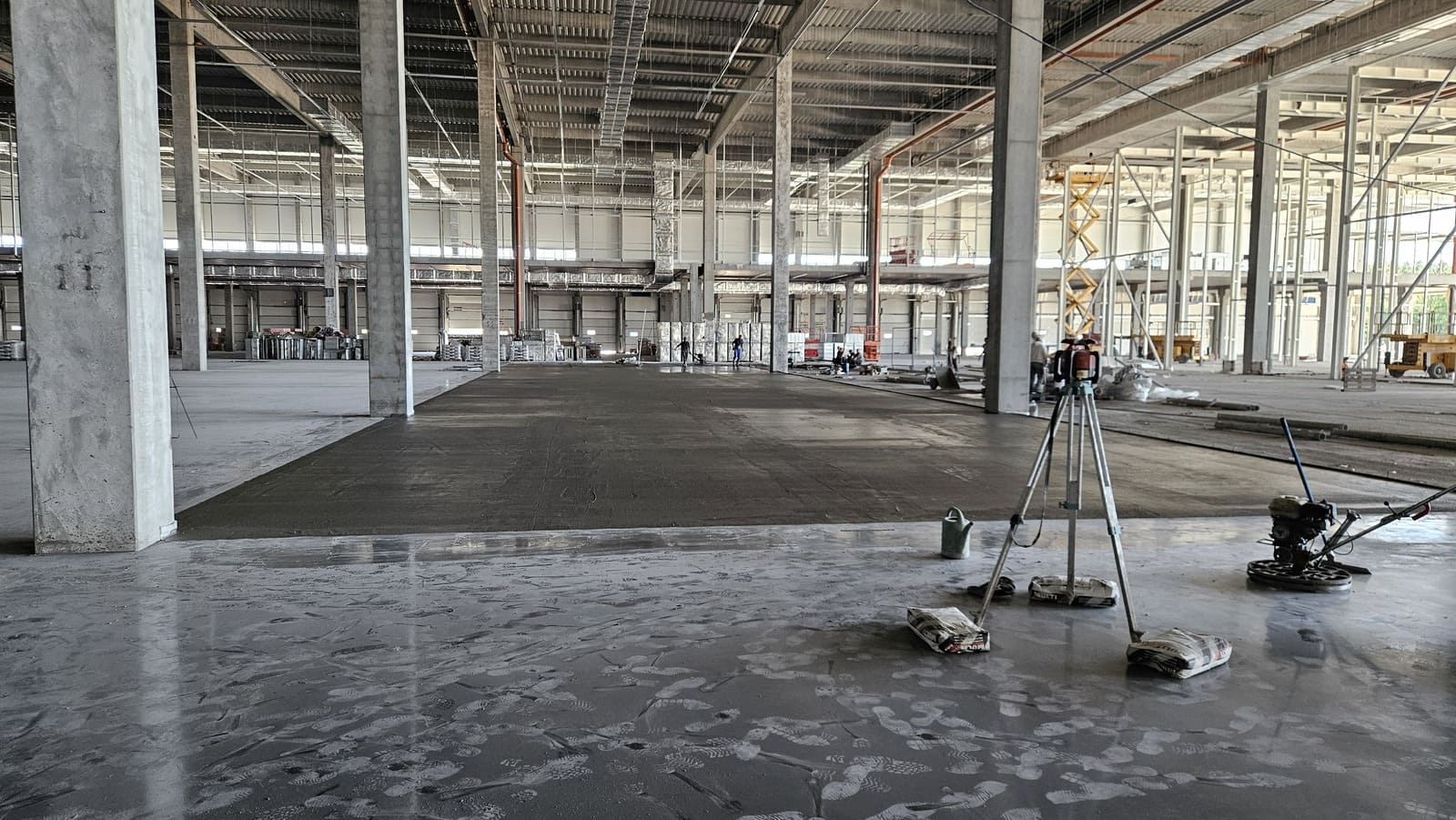
Installation of industrial concrete floors for a logistics hub
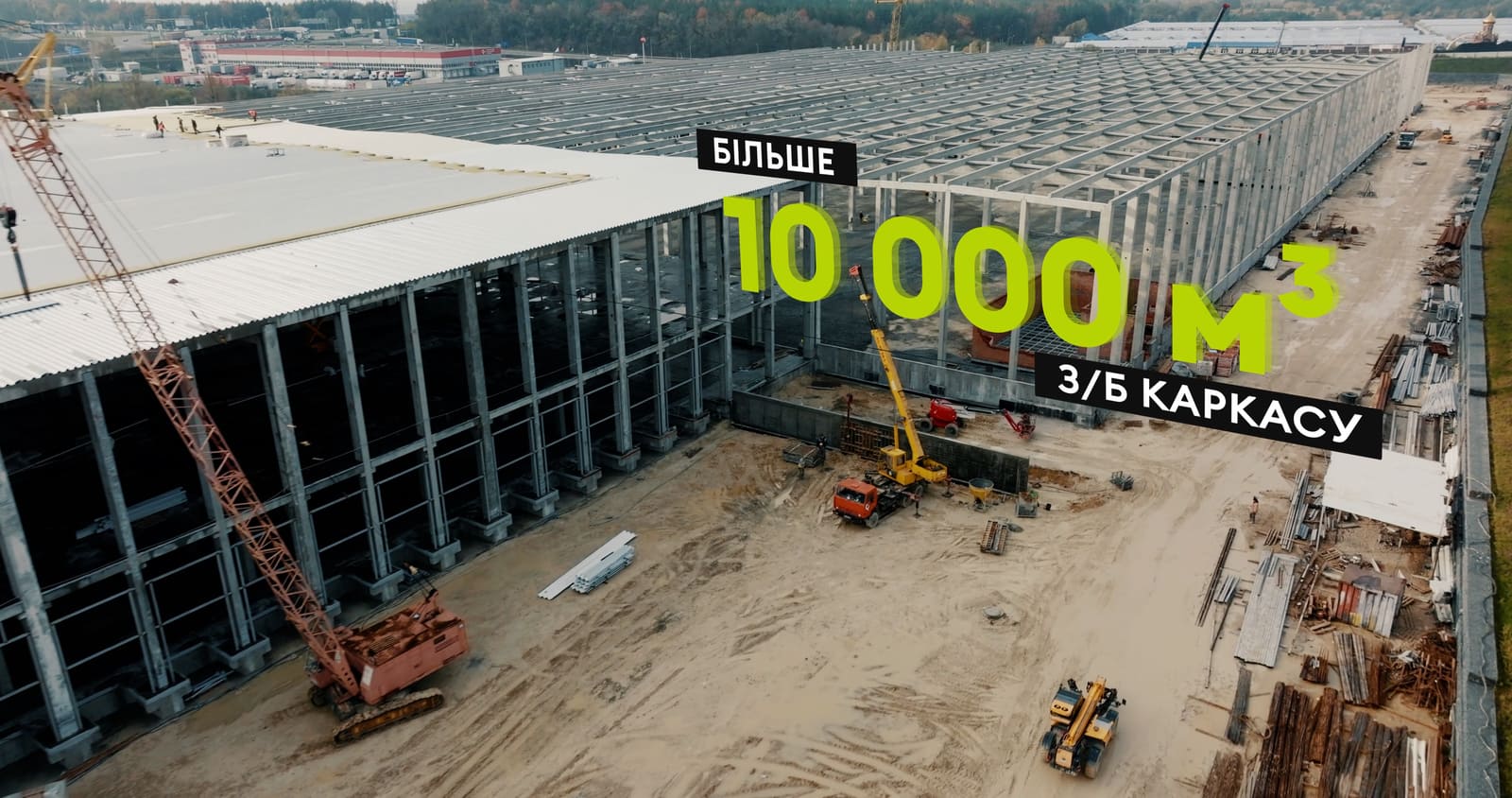
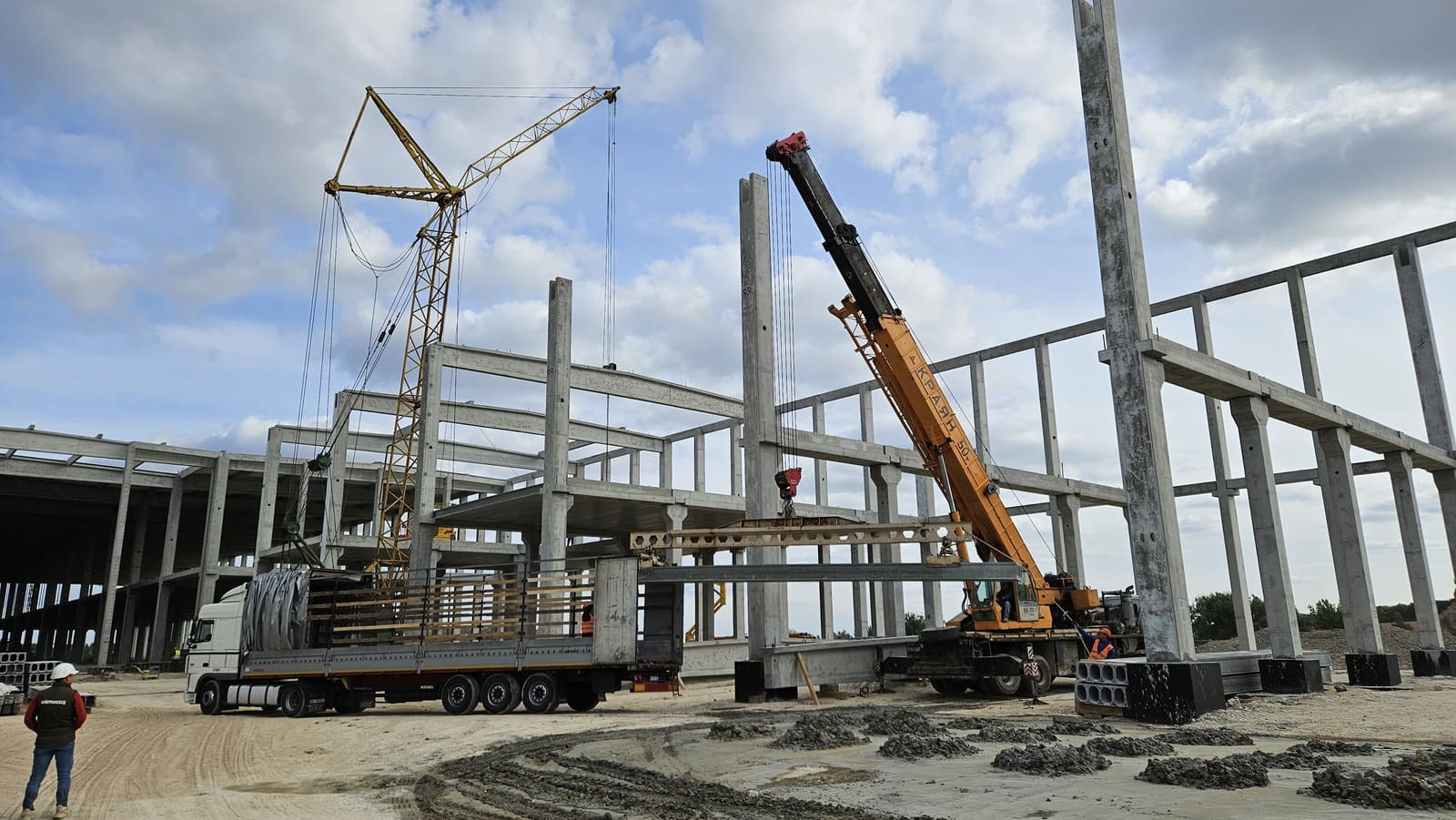
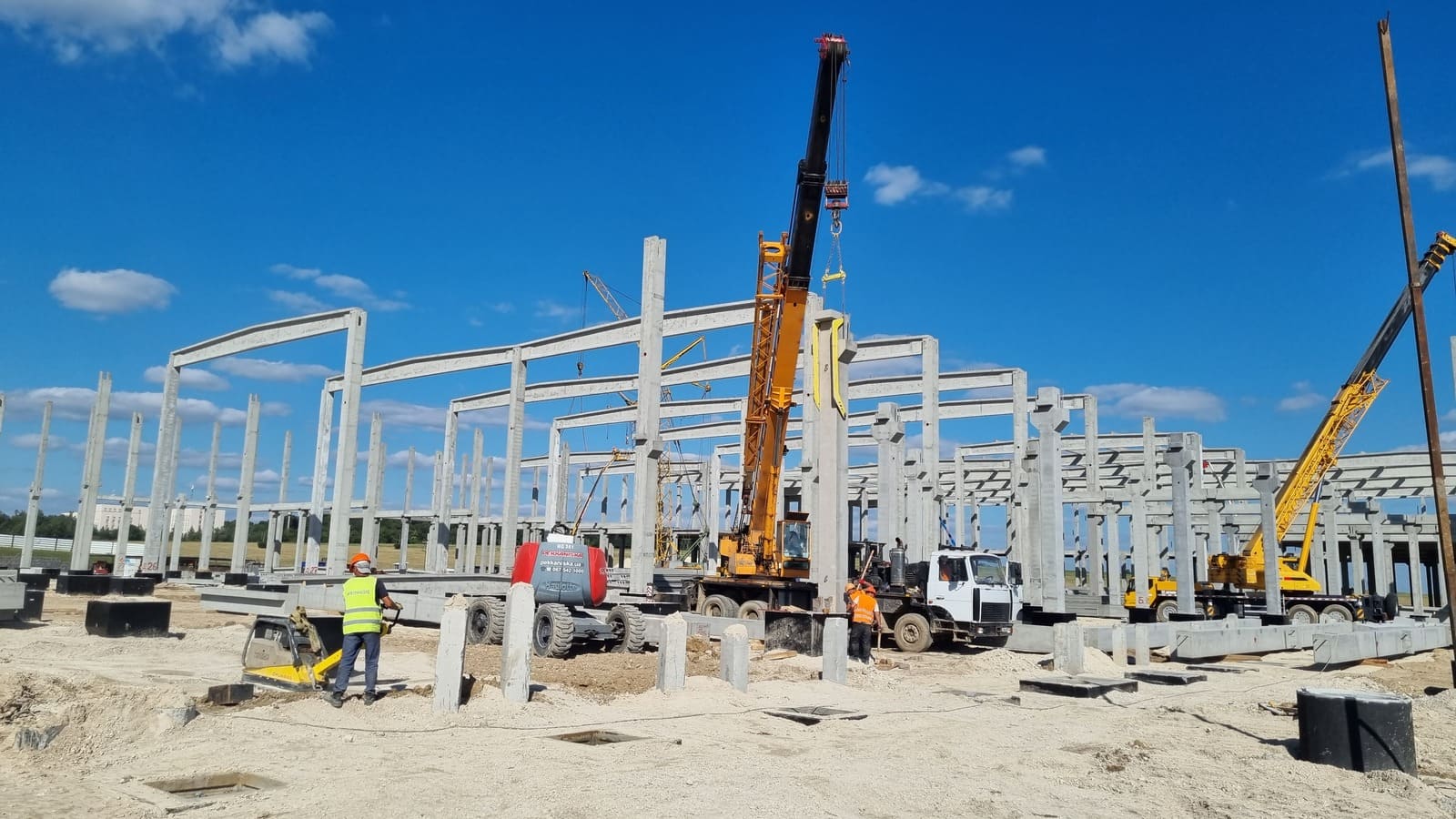
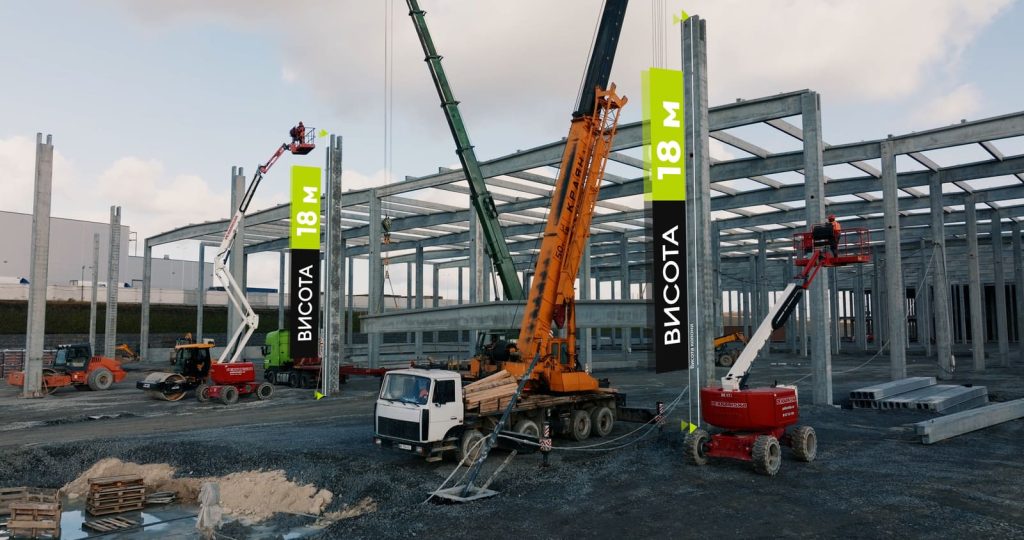
Installation of monolithic reinforced concrete structures - is a complex process of erecting building elements by placing and hardening concrete mix directly on the construction site in prefabricated formwork with a reinforcing cage. This process requires highly skilled workers and strict adherence to technology at all stages to ensure the reliability, durability, and compliance with the design requirements of the structures.
Let's look at the main stages of installation of monolithic reinforced concrete structures:
1) Preparatory work: site planning, delivery of materials and equipment, and site cleanup.
2) Installation of formwork: installation of formwork panels according to the project, their alignment and fixing. The formwork must be strong and stable to support the weight of the concrete.
3) Reinforcement: manufacture of reinforcing cages or meshes, their installation in the formwork with fixation and provision of a protective layer of concrete. Reinforcement is installed to increase the strength and resistance of structures to various loads.
4) Concreting: feeding the concrete mix into the formwork, compacting it with vibrators to remove air and ensure even distribution. The concrete must be thoroughly compacted to avoid the formation of cavities.
5) Concrete maintenance: providing the necessary conditions for strength gain - moisturizing, warming, and heating. This process can take from several days to several weeks, depending on the type of concrete and environmental conditions.
6) Formwork: dismantling of the formwork after the concrete reaches the required strength, usually in 4-10 days, depending on the type of concrete mix, plasticizers used and ambient temperature.
7) Finishing work: after dismantling the formwork, finishing work is carried out, which may include grinding, coating with protective substances, etc.
The advantages of monolithic reinforced concrete include the ability to create structures of any shape, high strength and rigidity, fewer joints than precast concrete, and transportation savings. The disadvantages are higher labor intensity and duration of work, and dependence on weather conditions.

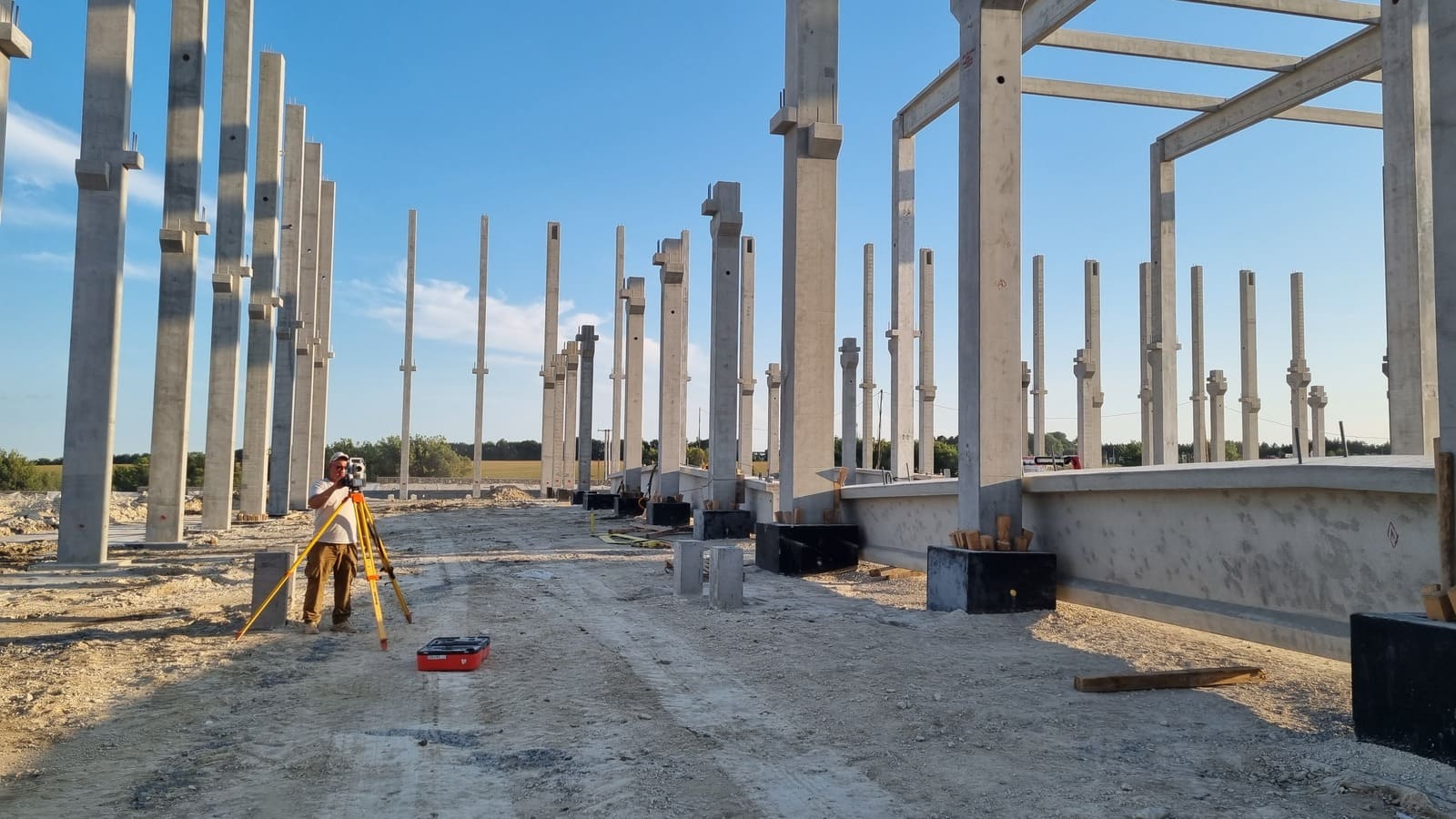
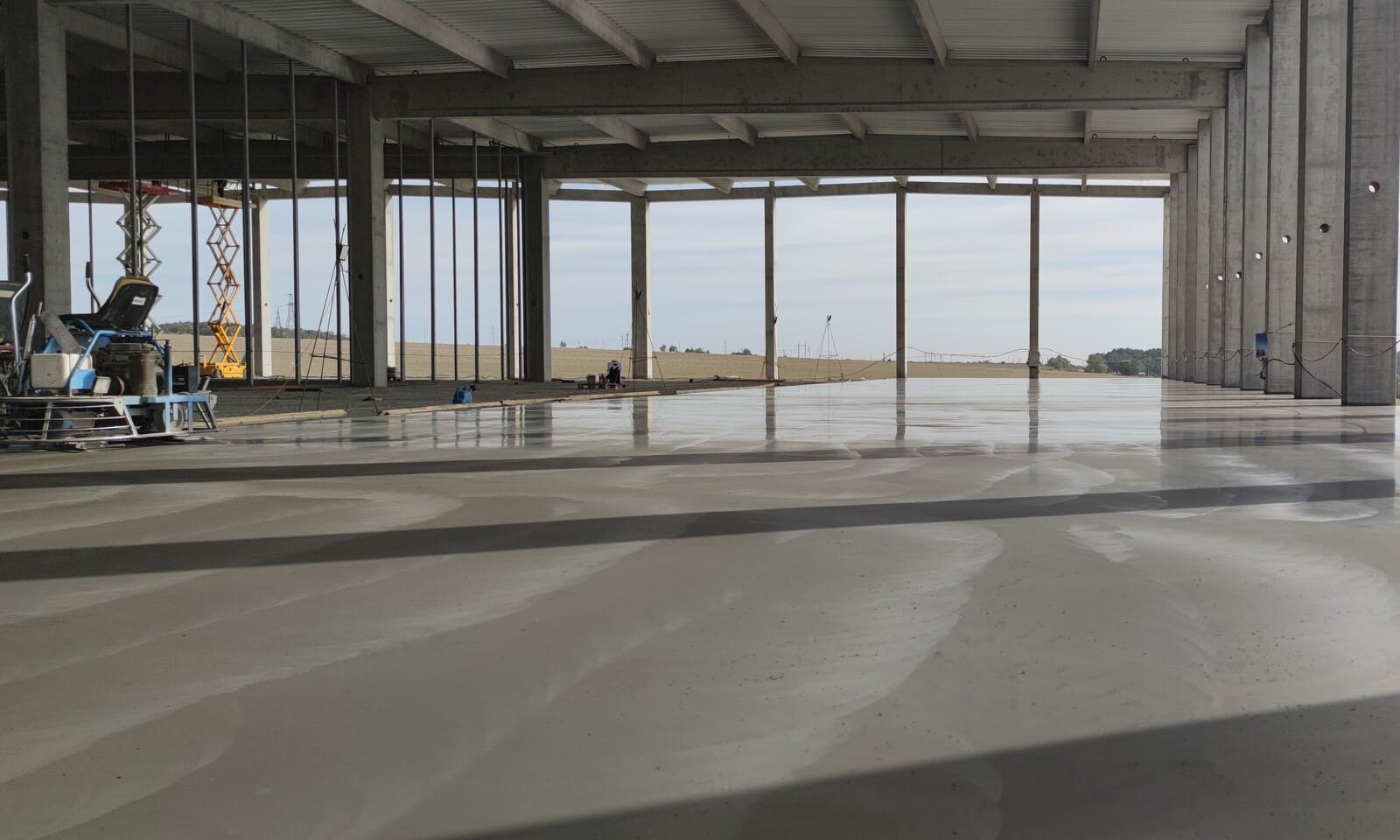
Installation of monolithic reinforced concrete structures for the logistics hub
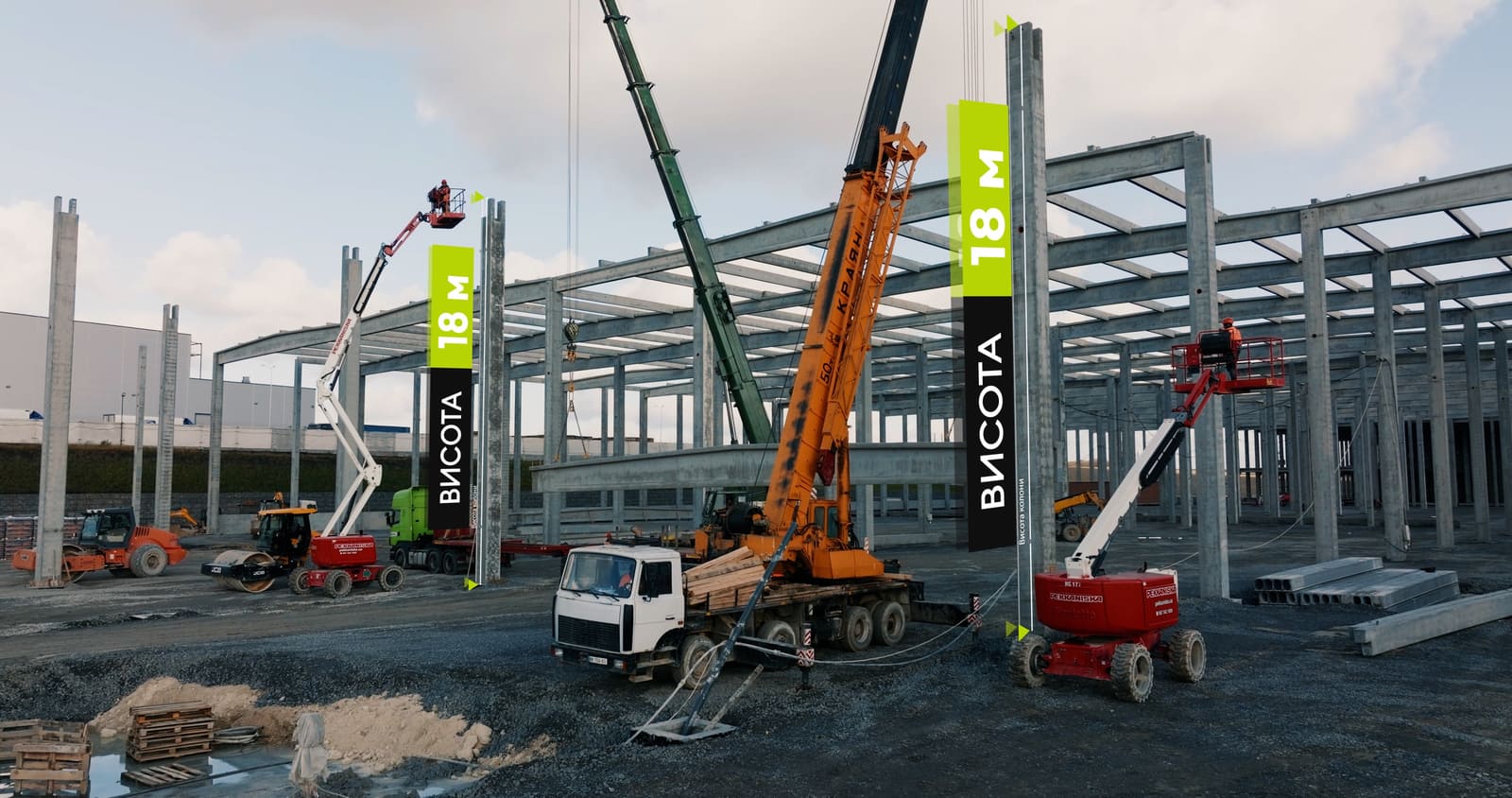
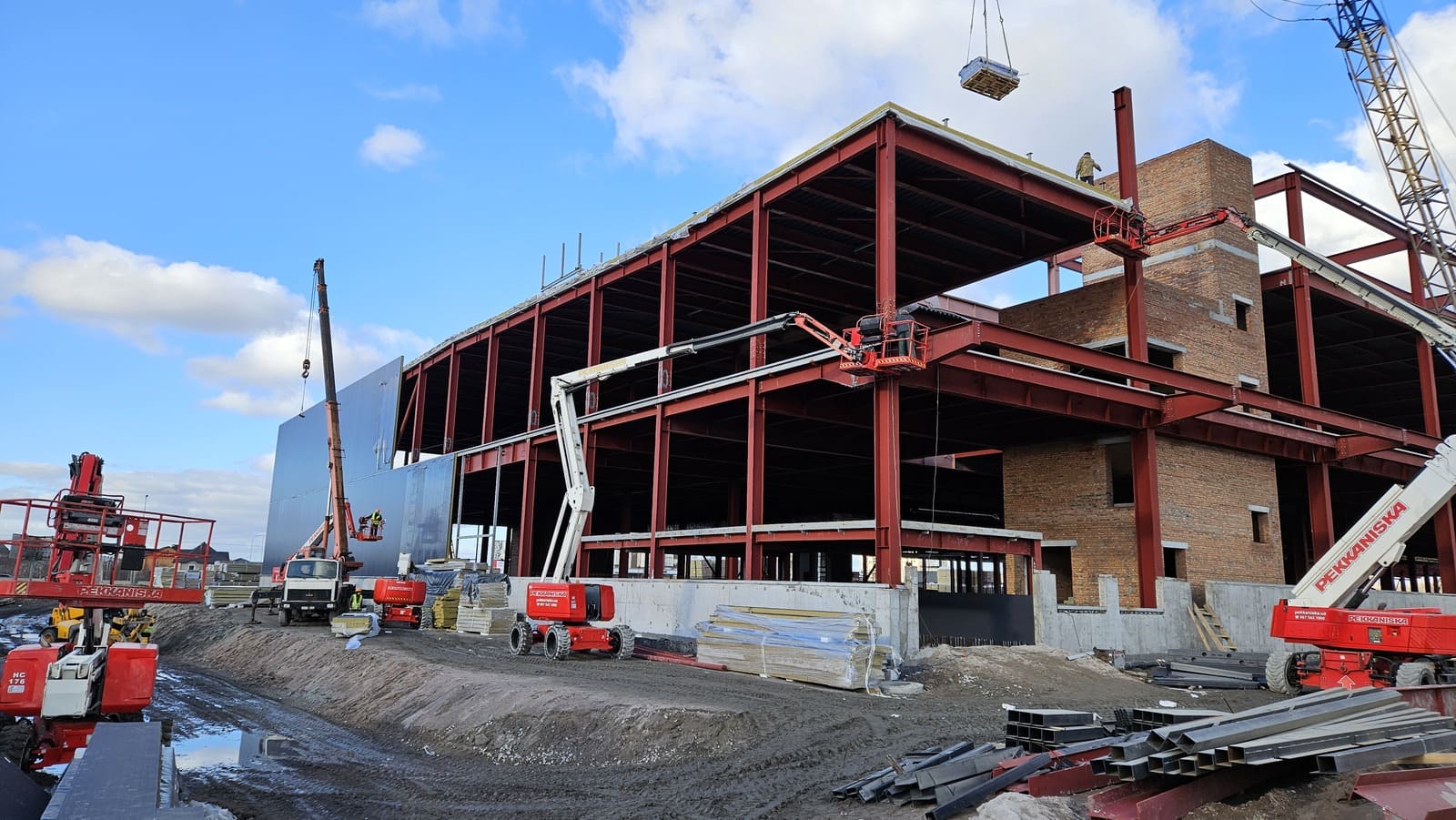
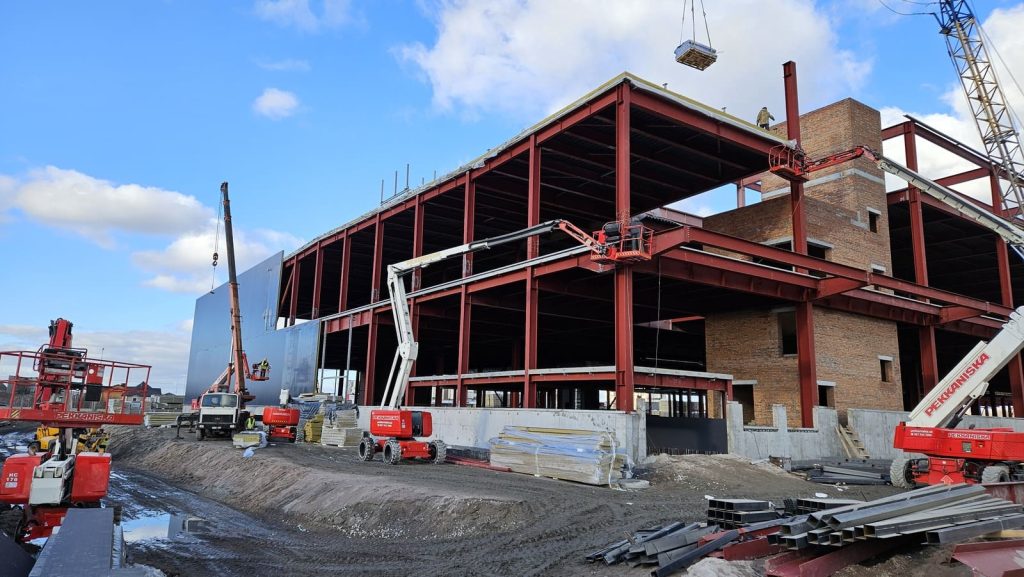
Installation of metal structures - is a complex process that involves the design, manufacture, transportation, and installation of metal elements to create the frame of a building or structure.
Let's look at the main stages of metal structure installation:
1) Design: We develop a detailed design of metal structures with load calculations, selection of materials and connection methods.
2) Manufacturing: Individual elements such as beams, columns, trusses, etc. are manufactured at the plant according to drawings. Control assembly and strength testing are performed.
3) Transportation and preparation: The finished elements are delivered to the construction site in a certain sequence. Some elements are sorted and assembled in a larger scale.
4) Preparatory work at the site: The construction site is being set up and the necessary equipment is being installed. Foundations and supporting elements are being built.
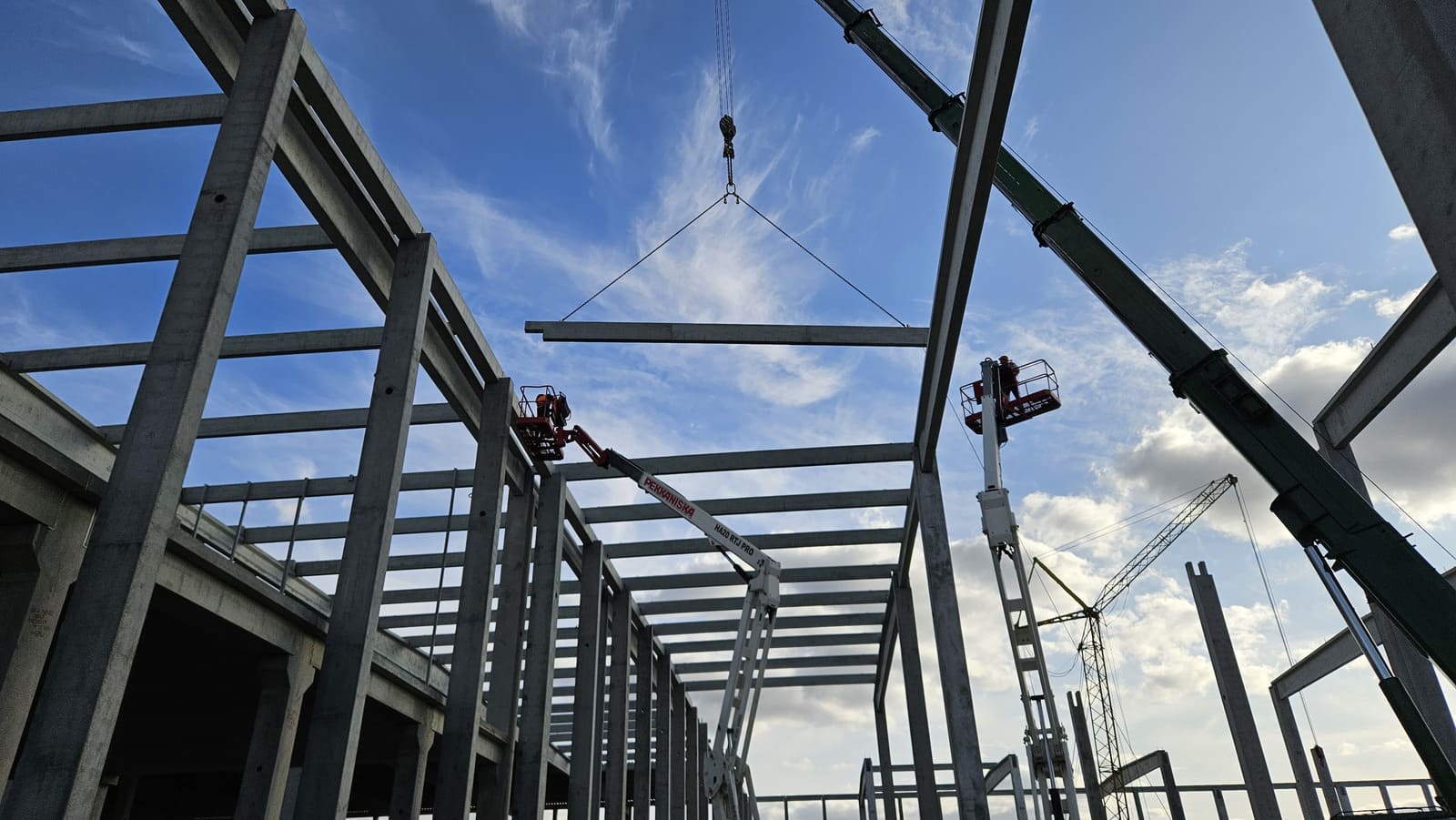
5) Installation of elements: Using cranes, metal elements are lifted and installed in the design location. Temporary supports and spacers are used.
6) Connecting elements: The individual parts of the structures are joined together by welding, bolts or rivets to form a rigid frame.
7) Finishing and flooring: Wall and roof enclosing structures are formed from sandwich panels or other methods.
8) Corrosion protection: The metal is painted or otherwise protected from corrosion to extend its service life.
9) Quality control: At all stages, the accuracy of installation, the quality of connections, and compliance with the project are monitored.
The installation of steel structures requires highly skilled workers, compliance with safety standards, the use of special equipment and precise execution of all stages to ensure the strength and stability of the structure. This method allows for the construction of reliable frame buildings with large spans, which is widely used in modern construction.
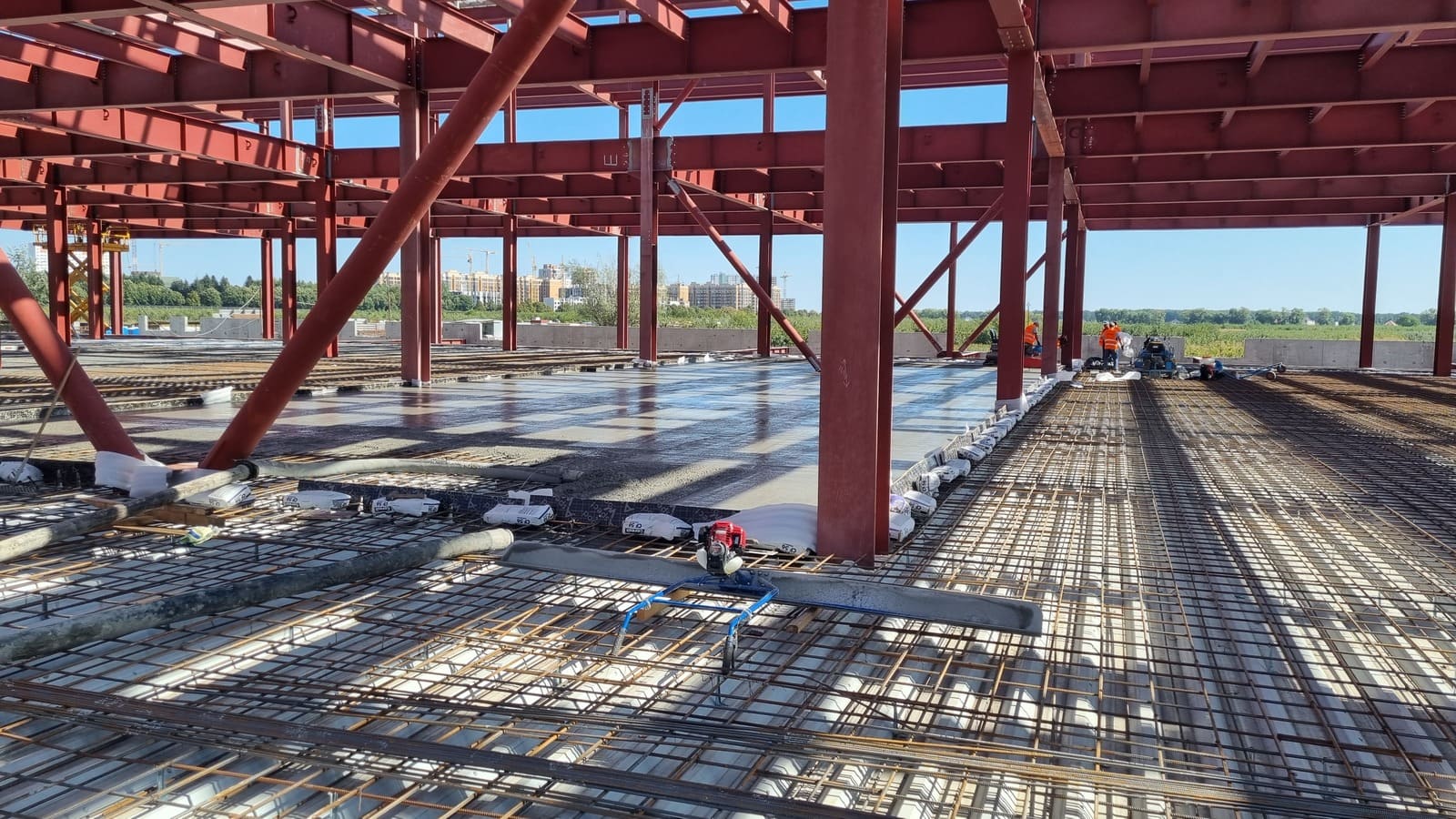
Installation of metal structures of the Green Gallery shopping center
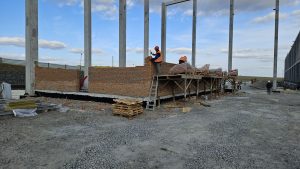
Building walls of stone, brick and blocks - is the process of erecting the walls of a building using these materials.
Let's look at the main stages and techniques of masonry:
1) Preparation:
- Inspect and prepare the work surface, eliminate defects and irregularities.
- Installing the supports for the first row of material.
- Marking the location of walls, door and window openings.
- Preparation of the solution in the right proportions to obtain a strong binder.
2) Bricklaying:
- Laying the first row, careful leveling.
- Single-row (chain) system: alternating poke and spoon rows with tying seams.
- Multi-row system: poke rows through several spoon rows with appropriate dressing.
3) Masonry:
- Preparation of natural stone and a special adhesive solution.
- Lay the stone on the wall, starting from the first row, following the guide cord.
- Grouting the joints with a special mixture after the adhesive has hardened for an aesthetic look.
4) Laying of blocks:
- Use of special thin mortars for masonry of different types of blocks.
- The use of tape joints in the construction of walls made of certain types of blocks.
5) Masonry corners:
- Single-row system: specific laying of bricks at the corners using three-fourths, pokes, spoons.
6) Final processing:
- Removing excess glue, concrete drops, grout.
- Cleaning the wall surface with special means.
- If necessary, reinforcements, openings, and bridges are installed.
For high-quality masonry, it is important to use the right tools, follow the technology and engage experienced professionals. This will ensure the strength, durability and beautiful appearance of the building walls.

Installation of gabion structures - is the process of creating strong and durable structures from metal mesh filled with natural stones.
Let's take a look at the main stages of gabion construction:
1) Planning and design
- We determine the size, shape and purpose of the gabion structure, taking into account the geology of the area and load requirements.
- Choose a suitable mesh material (galvanized steel or PVC-coated wire) and aggregate (stone, pebbles, crushed stone).
2) Preparation of the base
- Prepare a flat and solid base by removing vegetation and soil to the required depth.
- If necessary, we arrange a strip foundation or lay geotextiles to prevent soil leaching.
3) Installation of gabions
- Assemble the gabions according to the manufacturer's instructions, connecting the panels with spirals or fasteners.
- We install internal partitions and tensioning hooks to ensure structural strength.
4) Filling gabions
- Fill the gabions with stones or other selected material, following the recommendations for the size of the fraction (2-5 times the diameter of the mesh cell).
- Distribute the aggregate evenly, placing large stones at the edges and smaller ones in the middle. Tamp it down for better compaction.
5) Closing and fixing gabions
- Close the gabions and fix the grid covers with fasteners.
- When using gabions for retaining walls, we backfill with soil with layer-by-layer tamping.
6) Quality control and service
- We check the correct assembly, filling, and stability of gabions in accordance with the design requirements.
- We recommend that you regularly inspect the structure for damage, clean it of vegetation and debris. If necessary, replace the filler.
Gabion structures - is an environmentally friendly, durable and long-lasting solution for strengthening slopes, banks, and building retaining walls and fences. Compliance with the rules of installation will ensure the reliability and aesthetics of gabions for many years.

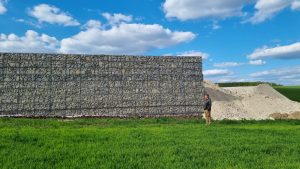
Installation of gabion retaining walls for the logistics center with a height of 2 m to 13.5 m, a total length of 2,300 m, and a volume of 15,000 m³
The construction company Kyivtransbud uses gabions for:
- Strengthening river banks, reservoirs and slopes, preventing landslides and soil erosion
- Construction of retaining walls, dams, embankments and other earthworks
- Landscape design, landscaping and interior decoration
- Construction of noise barriers along the roads
- Military shelters and fortifications
Due to their numerous advantages and wide range of applications, gabions are a popular solution for a variety of projects around the world, providing reliability, durability and aesthetic appeal to structures.
Entrust the installation and arrangement of structures for your industrial facility to professionals Kyivtransbud. We guarantee impeccable quality of work, meeting deadlines, and an individual approach to each project. Contact us for a consultation and to order services!